Breastfeeding: we all cried
I had breast surgery no one mentioned. A nipple no one told me to prepare. And a nurse who scolded me for not knowing. This is my real story.
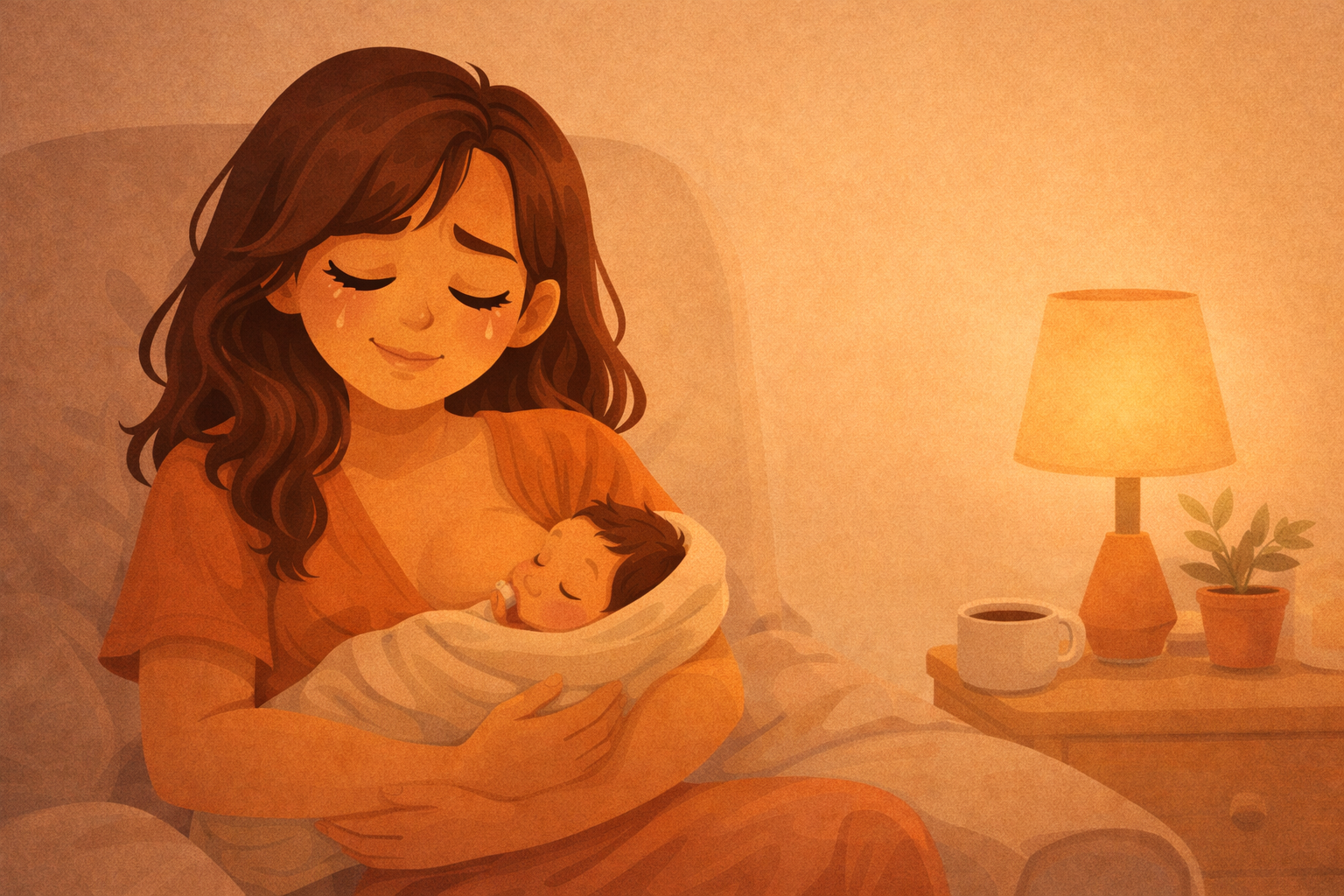
Nobody told me it was going to be like this.
Not the books. Not the courses. Not the pregnancy apps with their pretty illustrations. Nobody.
And I arrived at the hospital thinking breastfeeding was something that just… happened. Like breathing. Like something the body knows how to do on its own.
Spoiler: it doesn’t.
What nobody knows about my surgery
Almost ten years ago I had breast augmentation surgery. I was in my mid-twenties, I knew I’d want to be a mom someday, and I told the doctor clearly: I want to be able to breastfeed. Plan the surgery around that.
And he did. Implant behind the muscle, done the right way.
But nobody — not that doctor, not any other during nine months of pregnancy — told me that even so, even with a well-planned surgery, breastfeeding could be hard. That when the implant goes behind the muscle, milk ducts can be cut. That this can affect production. That my surgical history mattered and that I should know about it before I had my daughter in my arms.
I found out in the hospital. In the worst possible way.
And in that moment I completely fell apart.
I felt like the worst mom. For having had the surgery. For having cared about my appearance. For prioritizing something “superficial” instead of thinking about the baby I would someday have. I tore myself apart without anyone having to say a single word.
Nobody had to. I did it to myself.
And I need to say something about that before I go on: making decisions about your own body in your twenties is not a mistake you owe anyone guilt for — least of all yourself, at 3am, with a crying baby in your arms. A surgery you freely chose, in a different chapter of your life, does not define what kind of mother you are.
But postpartum doesn’t know that. It charges you for everything. With interest.
The first night in the hospital
As soon as they moved us to the room — Baby I. just born, me completely wrecked after 58 total hours of labor, both of us exhausted — a nurse walked in and told me, with an efficiency that left no room for questions:
“You need to breastfeed now. Like this.”
I couldn’t do it.
I called the nurse three times that night. Three times.
The third time she scolded me. Literally. She told me they’d already explained it, and why couldn’t I do it on my own.
Friend. I had given birth hours before. I had an incision in my abdomen. I had a tiny person in my arms who depended on me completely. And I was being reprimanded for not knowing how to breastfeed perfectly.
I packed that away somewhere deep inside. And kept trying.
We got home. And I thought everything was fine.
The first days at home were… confusing. I felt like I was breastfeeding. Baby I. was latching, I was putting her to the breast, it seemed to be working.
My husband wasn’t so sure. He told me he felt like she wasn’t satisfied. That she cried a lot. That something wasn’t adding up.
I told him she was eating.
What neither of us knew was that there was a problem that nobody — and I repeat this because I still find it unbelievable — nobody had mentioned to me:
My nipple wasn’t protruding the way it needed to for a proper latch.
And I didn’t know it because nobody told me that was something to check. That it existed. That there were techniques to address it. That this was something to prepare before the baby arrived.
I arrived at motherhood without knowing that nipples can be flat or inverted and that it directly affects how a baby latches.
Nobody. Told. Me. That.
The first weekend doctor visit
We went to the first weekend checkup. Routine. Weight check.
Baby I. had lost more than the acceptable percentage of birth weight.
The doctor was clear: we needed to supplement with formula.
I cried. That afternoon, that night, the next day. I cried my eyes out.
Not because formula is bad — I know that now, I couldn’t see it then. But because I felt like I had failed. Like my body had failed. Like everything I thought I was doing right… wasn’t enough.
The consultations. The information. The chaos.
My brother and sister-in-law gifted me a lactation consultation. A beautiful gesture that at the time I processed with the brain of someone who hadn’t slept and was at the absolute limit of everything.
I learned that there are approximately 700 different latch positions (I’m exaggerating, but not by much). That there are nipple shields. That there are pumps that help draw out the nipple. That there are techniques, routines, protocols.
I left that consultation overloaded with information, more exhausted and more lost than before.
I was crying. Baby I. was crying. My husband looked at us both and didn’t know what to do. My mom, who was with us, was crying too.
We all cried.
That’s not a metaphor. That’s exactly what happened.
The doula who came to the house
The second intervention was our doula. She came to the house, checked me, and found something nobody had mentioned: I had a slightly blocked milk duct.
She did an extraction. She looked at me. She recommended switching pumps — the one I had wasn’t the right fit for my situation.
I followed her advice. I started producing a little more.
But I still felt like it wasn’t enough. That the quantity wasn’t there. That something was missing.
The clinic. The weigh-in. The confirmation.
The third consultation was at a clinic, referred by our family doctor.
There they did something that changed everything: a weigh-in before feeding and one after. To know exactly how much Baby I. was taking at each feeding.
And the result was: she was eating.
All that time. All that doubt. All those tears. Baby I. was getting milk. Not in the perfect quantities I had imagined, but she was eating.
Also: my nipple had come out. With the nipple shields, with the pumping, with time. We finally had the latch we needed.
I started organized pumping sessions. Power pumping. Schedules. Consistency.
One month later
Baby I. gained weight.
Today I’m EBF — exclusively breastfed.
My nipples still hurt sometimes. They burn. I still get cracks. It’s not perfect or pretty all the time.
But we did it. Both of us.
What I need you to read before you go
If you’re in this right now — in that 3am desperation, with cracked nipples, with a baby who’s crying and you are too, wondering if you’re doing it right or wrong — I want to tell you something I wish someone had told me:
Formula is not bad.
It doesn’t ruin the bond. It doesn’t turn your baby into a statistic. It doesn’t make you a bad mom. It’s food. It’s nutrition. It’s a valid choice.
I did it — and I’m glad I did — but the pressure I put on myself was brutal and unnecessary. I had this idea locked in my head that I had to make it work. That if I didn’t, I had failed.
No. That’s not true.
Your mental health is more important than breastfeeding. Put yourself first. A mom who is okay takes better care of her baby — with breast or with formula, it doesn’t matter.
And if anyone scolds you for not doing it perfectly the first night after giving birth:
They can go breastfeed themselves.
Did you have a hard experience with breastfeeding? Or did someone make you feel bad about how you fed your baby? Tell me. This is only bearable when we carry it together.